
Cook County Bench Warrants Explained
The trigger is usually a skipped court date, an ignored order, or a broken condition in a Cook County case. One miss can cascade. Probate Court in Cook County warns that missing a traffic date can bring failure-to-appear status, a bench warrant, a license consequence, and an added FTA fee. The Superior Clerk handles bench warrants and bond forfeitures. Magistrate Court lists bench warrants and contempt orders as well. Names vary. Cook and Georgia sources say “bench warrant” or “failure-to-appear warrant,” and none use “capias pro fine.” Enforcement is half the story. The missed appearance, payment, bond, or other duty still belongs to the issuing judge to address. Call the issuing clerk. The Cook County Sheriff, at (229) 896-7471, can separate a docket entry from current execution status.
Cook County Citation to FTA Timeline
A traffic bench warrant in Cook County follows a documented local path. The citation sets the court date. It also names the responsible court. Cook Probate closes online payment at midnight on the court date, and must-appear offenses are excluded, so a missed required appearance can bring failure-to-appear action and a bench warrant.
Citation issued → court date or permitted payment → missed obligation → FTA action → bench warrant → court reset, recall, appearance, or other disposition
The Cook Probate citation page notes that a citation can take up to fourteen business days to appear online. That delay matters before the court date. A blank payment portal after a missed date proves nothing. Probate Court takes calls at (229) 896-3941. A city citation runs through the municipal court named on the ticket. Adel, Sparks, Lenox, and Cecil keep their own city jurisdiction, so county Probate cannot be assumed to control every traffic-related Cook County bench warrant.
How Cook County Bench Warrants Are Issued
The judge acts within an existing Cook County case. The trigger is a required event or condition that went missed. In a traffic case, Georgia’s uniform citation rules authorize failure-to-appear procedures and warrant action. In a superior criminal case, a missed hearing while on bond can bring a bench warrant and a separate bond-forfeiture issue. The clerk records the action. The sheriff handles service, arrest, or custody questions.
- The court sets a date, payment, bond condition, or other required act.
- The person does not satisfy the obligation according to the court record.
- The judge determines whether to issue a bench warrant under the applicable procedure.
- The clerk enters the order in the case file and routes information through authorized systems.
- The warrant stays open until served, recalled, quashed, or otherwise disposed by lawful action.
Cook County publishes no standard warning period before a bench warrant issues, and no grace window is guaranteed. Mailed notice may never come.
When an Emergency Caused the Miss
Cook Probate offers a path when a medical emergency, family emergency, or incarceration caused a missed traffic-court date. Contact the clerk about a new date. Have valid proof ready. This is not an automatic cancellation. The Cook County court decides what the documents support and whether the bench warrant or FTA action changes.
Local path: Call Cook Probate promptly, identify the citation and missed date, and ask what proof the court will accept.
For a Superior, Magistrate, or municipal case, call that issuing clerk instead. Ask the question plainly. Find out whether a written motion, attorney appearance, personal appearance, or supporting document is required. Cook County has no countywide recall form. No published recall fee exists either. A borrowed form does not apply here. If incarceration elsewhere caused the absence, give the clerk enough detail to identify the facility and dates, and send documents only through a channel the court confirms.
Cook County Bench and Arrest Warrants Compared
Both orders can authorize custody. Their legal triggers and file histories differ. A Cook County bench warrant usually grows from an existing case or court obligation, while an arrest warrant ordinarily follows a sworn probable-cause process concerning an alleged offense. Magistrate Court handles most criminal-warrant applications. Several Cook County courts can issue bench warrants in their own matters.
| Feature | Bench Warrant | Arrest Warrant |
|---|---|---|
| Usual trigger | Missed court date, contempt, or unmet court condition | Probable cause concerning an alleged offense |
| Case posture | Usually tied to an existing court file | May begin a new criminal custody process |
| Decision maker | Judge responsible for the pending matter | Judge or magistrate reviewing sworn material |
| Records route | Issuing clerk plus sheriff status check | Magistrate or Superior file plus sheriff status check |
| Resolution focus | Recall, quash, reset, compliance, or appearance | Surrender, first appearance, bond, and defense process |
Cook County dockets can hold either order, so read the docket entry and its court order in full context.
Cook County Bench Warrant Terms
Exact words matter in Cook County. Ask the clerk what the case entry means. Clerks can explain procedure and records, and point to the office that confirms execution status, but they cannot give legal advice.
- Failure to appear
- A recorded absence from a required court date that can support bench-warrant action.
- Bench warrant
- A warrant issued by a judge in connection with a missed court duty or condition.
- Recall
- Judicial withdrawal of a warrant, which should be confirmed as entered in the case file.
- Quash
- A court action setting aside the warrant under the applicable procedure.
- Bond forfeiture
- A separate financial consequence that may follow a missed appearance by a bonded person.
- Disposition
- The recorded result of the warrant or underlying matter, not merely a portal payment.
Cook County publishes no universal setting-code list. Ask the issuing clerk to explain any abbreviation on the actual docket.
Resolving a Cook County Bench Warrant
No single button clears a Cook County bench warrant. The issuing court controls the order. The right path depends on the missed duty, case type, custody status, and advice of counsel. Start by confirming the court, reference number, status, and next scheduled event.
- Call the sheriff and issuing clerk to verify the Cook County bench warrant and present status.
- Consult an attorney about custody risk and whether a motion to recall or quash is appropriate.
- Ask the clerk whether the court permits a reset, plea request, voluntary appearance, or requires another procedure.
- Address the underlying obligation, such as an appearance, proof, payment, bond issue, or court-ordered condition.
- Obtain court confirmation after the judge acts and check that the sheriff’s information reflects the change.
Caution: Payment alone may not recall a Cook County bench warrant, and an in-person status check can lead to custody.
Cook County publishes no warrant-only surrender hours, standard recall charge, or universal bond schedule. Confirm every instruction before travel or payment.
Cook Probate Plea Requests Have Limits
Cook Probate keeps an official plea or reduction request form for Cook County defendants. It collects your identity and contact details, the charge and citation, the arresting agency, bond facts, attorney information, your reason for asking, and any comments. File it before court. Review by email can take up to thirty days, and an offer may still add costs.
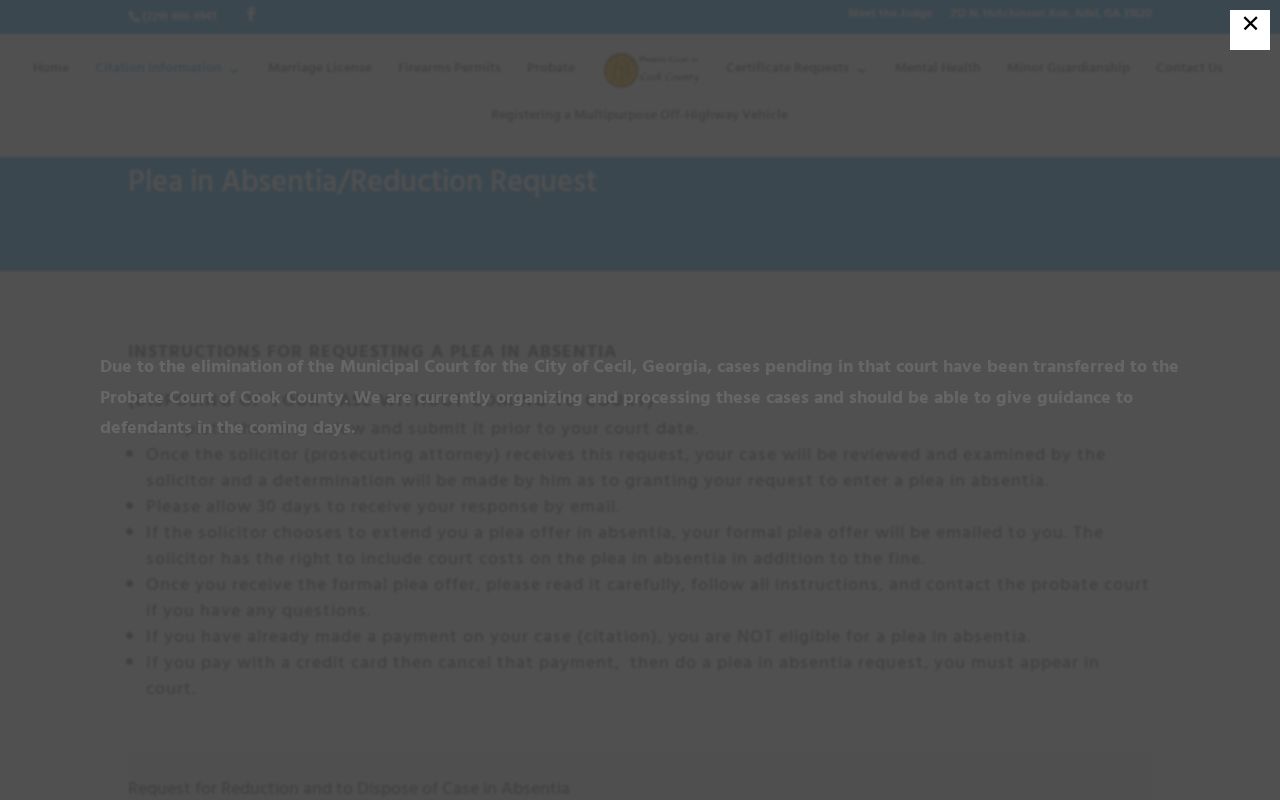
Know what this form is not. It is not a Cook County bench warrant lookup, and sending it does not promise a recall. Some cases are excluded, and the request goes to a solicitor for review. If you already paid, missed a court date, face a must-appear offense, or need status right now, call the Probate Clerk instead of assuming the form brings relief. Accurate entries matter too. Your legal name, date of birth, citation number, charge, and arresting agency all help match the correct court file in Cook County.
Finding the Cook County Court That Issued the Warrant
The official Superior Court clerk page identifies bench-warrant and bond-forfeiture work.
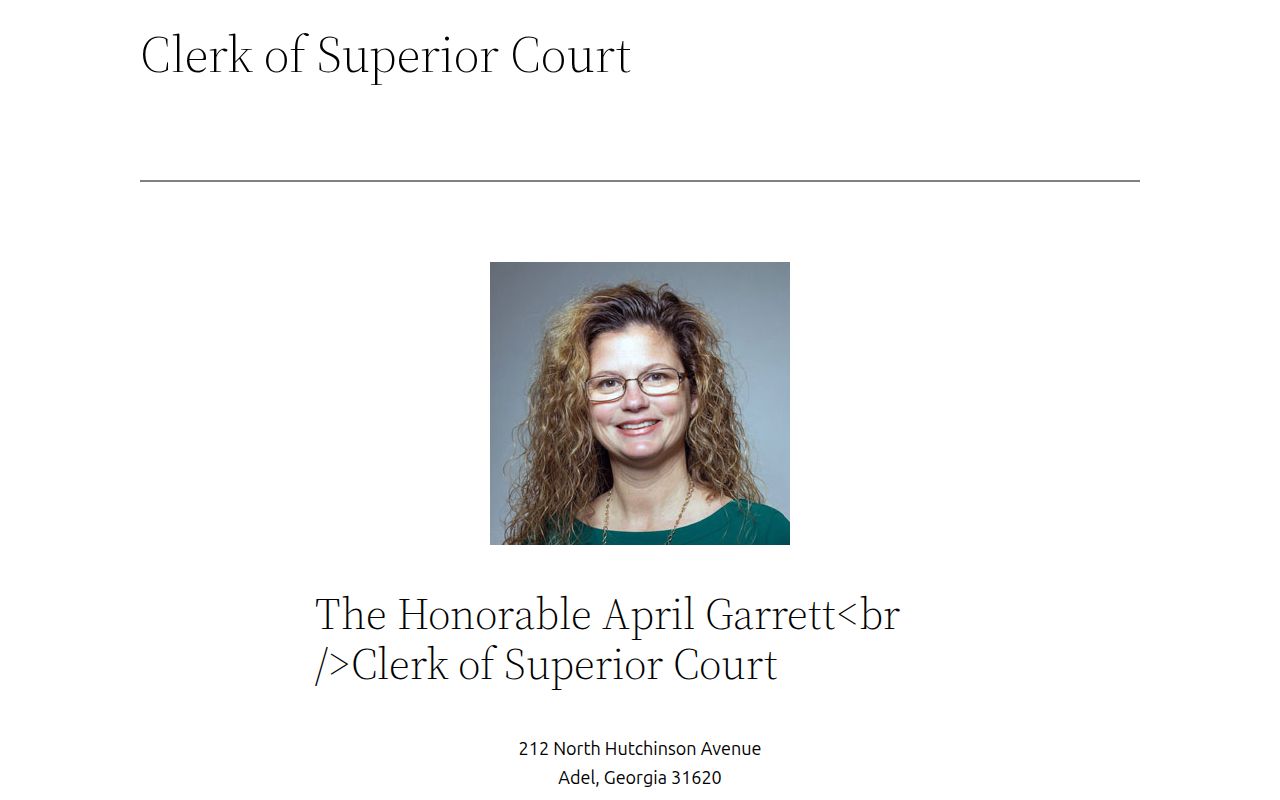
Why chase the issuing court? Because that judge, not a payment vendor or some other clerk, controls a recall or any other judicial action. The Superior Court of Cook County, Alapaha Judicial Circuit, handles felony and superior criminal cases, with clerk April Garrett at 212 N Hutchinson Avenue, (229) 896-7717. Magistrate Court sits at 1000 County Farm Road, (229) 896-3151. It takes criminal-warrant applications, preliminary matters, bond, and the listed bench-warrant functions. Other Cook County courts keep their own dockets.
| Clue | Likely Court | Official Contact |
|---|---|---|
| Superior criminal case or bond forfeiture | Superior Court | Superior Clerk, (229) 896-7717 |
| Warrant application or magistrate matter | Magistrate Court | (229) 896-3151 |
| County traffic citation | Probate Court | (229) 896-3941 |
| Adel, Sparks, Lenox, or Cecil ticket | Named municipal court | Use the city’s official clerk contact |
Paperwork unclear? A Cook County warrant lookup can trace the issuing court before you ask about resolution.
After Cook County Records a Recall
A judge's order and its entry in the record are two things, not one. A website result is a third. Ask the clerk for the date of the recall, quash, reset, or disposition, and how to get a copy. Then ask whether notice has reached the Cook County Sheriff or any other serving agency. Keep the court reference, receipt, order, and staff instructions together.
| Court action | Exact order the judge entered |
|---|---|
| Entry date | Date the clerk added the action to the case file |
| Case number | Identifier linking the action to the correct Cook County matter |
| Next date | Any reset hearing, payment deadline, or required appearance |
| Status confirmation | Follow-up with the clerk and sheriff after the entry is transmitted |
A receipt, a submitted form, or a portal message does not end the warrant by itself. If the underlying case stays open, follow every new deadline. For traffic matters, ask the Cook County court what notice it sends about any separate license consequence.