
Cook County's Most Wanted Program
The Cook County Sheriff's Office posts no most-wanted page, no searchable warrant roster, and no local Crime Stoppers list on its site. Its contact routing points to office and jail lines instead. The absence of a roster does not mean no warrants exist. Georgia's own instructions send a person to the sheriff in the county where a warrant may have been issued. For Cook County, call the Sheriff's Office at (229) 896-7471 and ask which office or jail extension handles the inquiry. The official site names no warrant-only line and promises no online results. Private sites that borrow names from other counties should be ignored, since Cook County has published nothing to copy.
No Cook County Wanted Roster Located
A roster is a publishing choice, not the warrant system itself. Cook County courts can issue warrants, and the sheriff can hold or serve them, even with no name field, results table, or downloadable list on the public site. An outside page that merely repeats the county name is not official.
Quick answer: Cook County publishes no official most-wanted roster. Confirm a personal matter through the sheriff and the court that issued it.
Do not treat a missing web list as clearance. A warrant record may be recent, restricted, filed under another spelling, assigned to a city court, or held outside Cook County. A real answer names the issuing court, the case or warrant number, and the current status, when those details may lawfully be released.
How the Most Wanted Lists Work
A most-wanted list is a small, selected set of priority cases, not the full group of unserved warrants. Agencies pick names for their own reasons. Removal can follow an arrest, a surrender, a recall, or another case update. Cook County has published no selection rules and no update schedule, so assume no fixed cadence. If an official Cook County list appears later, check who owns it, its date, its contact details, and its disclaimer. See whether it names the warrant type, the issuing court, the case number, and the status. A snapshot can lag the operational record. A copied image can stay online long after the source changes.
Note: A published list can lag current status, and absence from it never proves that Cook County has no active warrant.
Cook County Warrant Status Terms
A warrant is a court order, a form of judicial authorization. Arrest warrants, bench warrants, failure-to-appear warrants, and search warrants each arise for different reasons. In Cook County or anywhere else, the record needs its court and status context before it makes sense.
- Active
- The agency presently treats the warrant as executable, subject to direct confirmation.
- Served
- Law enforcement executed the warrant; later steps belong to the court docket.
- Recalled
- The issuing court withdrew the warrant, but the entry still needs current verification.
- Restricted
- Law or court order limits public access to some or all details.
The Superior Clerk handles superior criminal files, warrants, bench-warrant entries, and bond forfeitures. Magistrate Court lists criminal-warrant applications, search warrants, bonds, and bench warrants. These are distinct Cook County records, and no unofficial label can compress them into one.
Reporting a Tip Safely
Cook County has no Crime Stoppers program and no sheriff most-wanted tip line, so expect no anonymity guarantee, no reward, and no special local tip number. Call 911 for an immediate threat. For anything less urgent, the Cook County Sheriff's Office can route you and explain the next step.
- Confirm the alert is on an official government or law-enforcement source and check its date.
- Use the contact published by that agency, not a number copied into a social post.
- Report useful location or event details without confronting, following, or trying to detain anyone.
- Keep any reference number and follow the agency's directions if more information is requested.
Key point: Cook sources do not support a promised anonymous reward channel. Report safely through the responsible agency and step back.
Cook County Sheriff and Federal Marshals
The Cook County Sheriff's Office is the local starting point for county warrant status. The U.S. Marshals Service works at a different level. Its Middle District page describes the Southeast Regional Fugitive Task Force, a federal partnership active since 2003, but it is not a Cook County name search or local roster. The official U.S. Marshals district page shows that federal fugitive operations and local warrant records are separate things. Read its district and task-force material as agency context, never as a list of Cook County residents or a local warrant result.
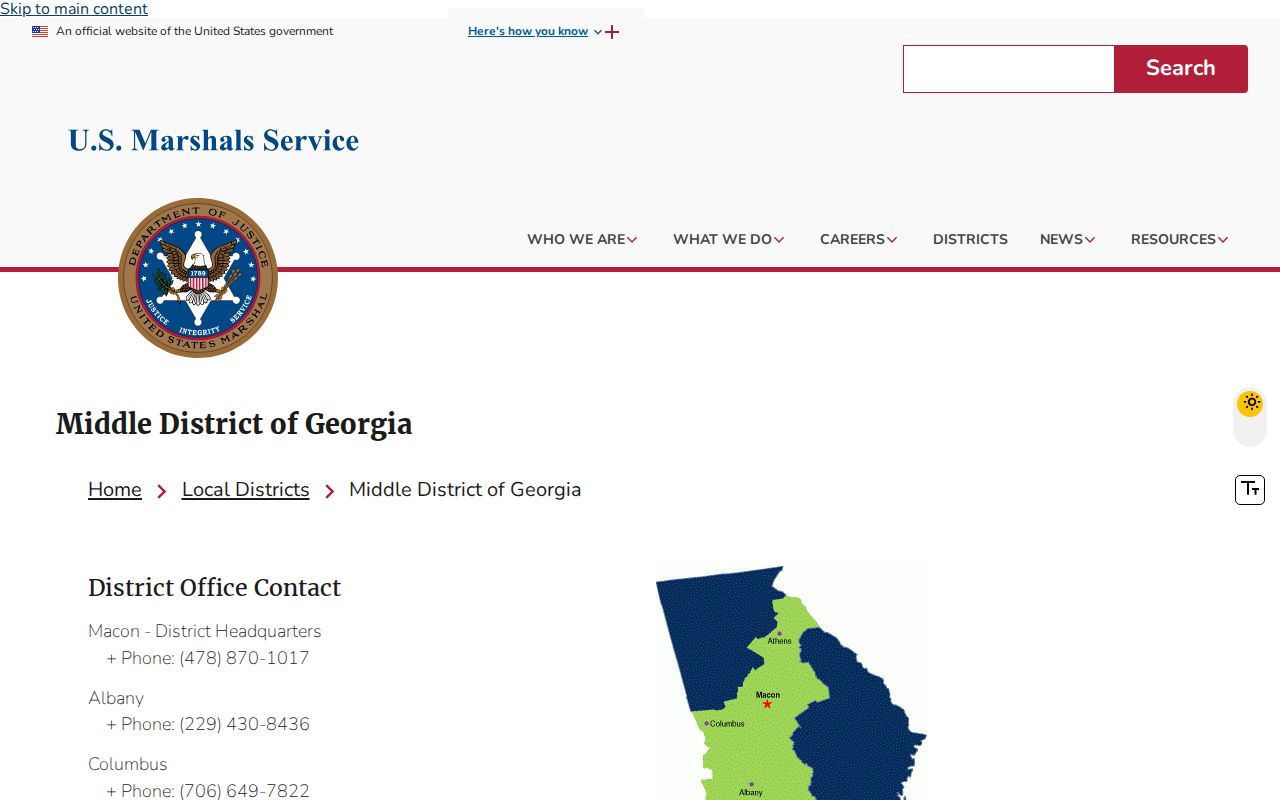
That program page has to be read at program level. It neither confirms nor clears a Cook County warrant.
Most Wanted Lists vs Active Warrants
The key distinction is scope. A wanted notice highlights selected matters. An active warrant is a legal status that can exist with no publicity at all. Cook County publishes no comprehensive online active-warrant list and no official most-wanted roster.
| Feature | Most-wanted publication | Active warrant |
|---|---|---|
| Scope | A selected public notice | Any warrant currently executable |
| Visibility | Only if an agency publishes it | May require direct contact |
| Meaning | Priority for publicity | Current judicial authority |
| Verification | Publisher and agency | Sheriff and issuing court |
The Cook County outstanding-warrant process explains why a person can have an active matter without ever appearing in a selected notice.
Verify a Cook County Official Alert
An official-looking image of a notice can leave out its date, its disclaimer, or a correction that came later. Start at the agency's own domain. A valid Cook County alert should name the county, identify the publishing office, and give an official phone. It should also make clear what the notice is, since a warrant differs from a news report or a mere request for information.
- Look for a visible publication or revision date.
- Confirm the source is a Cook office, Cook court, Georgia Courts, or identified federal agency.
- Ask whether the warrant is active, served, recalled, or otherwise not executable.
- Keep private addresses, family details, social profiles, and copied photographs out of any repost.
- Use the issuing court for the underlying procedural record.
News releases describe past enforcement or prosecutions, and PACER offers federal docket access. Neither one alone confirms today's Cook County warrant status.
If You Think You Are on a List
Wondering whether a most-wanted listing points at you? Do not send that question through a public tip line. If arrest seems possible, call an attorney first. Counsel can reach the Cook County Sheriff and the issuing court on your behalf, sort out whether the matter belongs to the county, a city, or a federal court, and ask about bond or a required appearance. A lawyer can also arrange a lawful voluntary surrender instead of a surprise arrest at your door. If you plan to contact the Sheriff directly, gather the exact legal name, date of birth, and any case, citation, booking, or warrant number before dialing. Ask whether the warrant is still active and which court issued it. Georgia's official guidance carries one hard warning: a person who asks in person can be taken into custody on the spot if an active warrant turns up. So call before you ever walk into a Cook County office.
Important: Speak with an attorney before appearing in person. Only the issuing court and responsible agency can confirm current status and next steps.
Cook County Capacity Is Not a Count
Staffing numbers describe capacity, not caseload. The 2026 Georgia Sheriffs Association directory estimates 29 sworn personnel and 60 total Cook County Sheriff's Office employees across patrol, investigations, jail, and civil or court work. Those figures say nothing about how many warrants exist, which ones are priorities, or how fast a record changes.
Cook County publishes no current aggregate of arrest warrants, bench warrants, failures to appear, or recalls. Any real count has to come from an official records response, not from tallying names off a list. Otherwise, staffing context turns into a false most-wanted total.