
Searching for a Warrant in Cook County
Pin down where the event happened first. Was it a citation, an arrest, or a missed hearing? Georgia runs no statewide public name index for warrants, and the Georgia warrant guidance points people to the sheriff of the county where a warrant may have been issued. That means Cook County callers should dial the Sheriff’s Office at (229) 896-7471 and ask whether a self-check can be done by phone or needs an in-person visit.
- Prepare the exact legal first and last name, date of birth, and any case, citation, booking, or warrant number.
- Ask the sheriff which office or court holds the Cook County warrant record and whether the status can be confirmed by phone.
- Call Magistrate Court at (229) 896-3151 for warrant applications, bond, preliminary-hearing, or magistrate matters.
- Call April Garrett, Clerk of Superior Court, at (229) 896-7717 for superior criminal files, bench warrants, and bond forfeitures.
- Use Probate Court at (229) 896-3941 for county traffic citations, or the named municipal clerk for a city citation.
Call before you walk in. Georgia’s official guidance warns that a person who shows up in person in Cook County with an active warrant may be taken into custody on the spot.
Three Cook County Calls Cover Most Searches
The right first call depends on what sits behind the question. The sheriff serves warrants countywide and holds anyone taken into custody. Cook County Magistrate Court says it handles nearly all criminal warrants, warrant applications, search warrants, bond hearings, and some bench warrants. The Superior Clerk keeps superior criminal and felony case files, and its listed functions include warrants, bench warrants, and bond forfeitures, so three quick calls cover most searches.
Cook County Sheriff’s Office
(229) 896-7471
Ask how to confirm current warrant status and whether the office or jail extension handles the inquiry.
Cook County Magistrate Court
(229) 896-3151
Ask about a warrant application, preliminary hearing, bond hearing, or magistrate bench-warrant record.
Superior Court Clerk
(229) 896-7717
Ask for the superior criminal file, court number, public docket entry, or bench-warrant information.
Three calls beat assuming one desk holds every Cook County warrant. When a web portal returns nothing, this route still gives you an official answer.
Cook County Warrant Search Fields Explained
Cook County publishes no verified public sheriff search form, so there are no official filters or result columns to copy. The fields worth gathering come from Georgia’s warrant instructions, the local court workflow, and the identifiers printed on Cook County court forms. Share only what staff actually request, through a channel you have verified.
| Field | Why It Helps | Where It Applies |
|---|---|---|
| Legal name | Separates the inquiry from nicknames or informal spellings | Sheriff and every court |
| Date of birth | Helps distinguish people with similar names | Sheriff, court, and citation checks |
| Case or citation number | Connects the request to a specific docket | Superior, Probate, or municipal court |
| Arresting agency | Helps route a citation or criminal record | Courts and clerk offices |
| Approximate date | Narrows a historical file or expected court event | Clerk and records requests |
Never send a Social Security number, license image, or similar sensitive detail to an unverified email address. Ask which identifiers the Cook County office needs first.
Cook County Phone Check or Courthouse Visit
A phone call settles things before you drive anywhere. You learn the accepted process, confirm hours, and find out which office holds the record. The official sheriff site lists 8:00 to 5:00 hours with separate office and jail extensions, but it posts no warrant-only counter hours and no dedicated warrant-unit line. Ask staff to confirm the right destination for a Cook County warrant question.
| Channel | Useful For | Limit |
|---|---|---|
| Phone | Routing, required identifiers, and current office instructions | Cook County has not promised that every status check is given by phone |
| In person | Identity checks, file inspection, or instructions that require an office visit | An active warrant may lead to immediate custody |
| Written request | Existing records described with a clear date and scope | A records response is not always the same as live execution status |
The county page, sheriff site, and sheriff directory show different office and mailing addresses. Verify the destination by phone before any Cook County warrant visit.
What a Cook County Warrant Search Shows
An official answer may list the warrant type, issuing court, case or warrant number, alleged charge category, issue date, agency, current status, and bond information, if the responsible office releases those items. Some fields may be missing. A blank field does not prove a favorable status in Cook County, and any field inventory is illustrative rather than a real record.
| Record type | Arrest warrant, bench warrant, failure-to-appear warrant, or another court order |
|---|---|
| Issuing court | Magistrate, Superior, Probate, Juvenile, or a municipal court |
| Reference number | A court-supplied case or warrant identifier, such as MASKED-CASE-NO. |
| Status | Active, served, recalled, quashed, disposed, or another term used by the office |
| Next step | Clerk contact, court date, bond instruction, or counsel-directed resolution |
Ask when the status was last checked. Ask which office can provide written confirmation. A live sheriff response and a historical Cook County clerk file answer different questions.
Cook County Uses State Contact Guidance
The state instructions matter because they define the limits of Georgia warrant access. The Georgia.gov warrant page lays out a county-contact process, not a statewide result list.
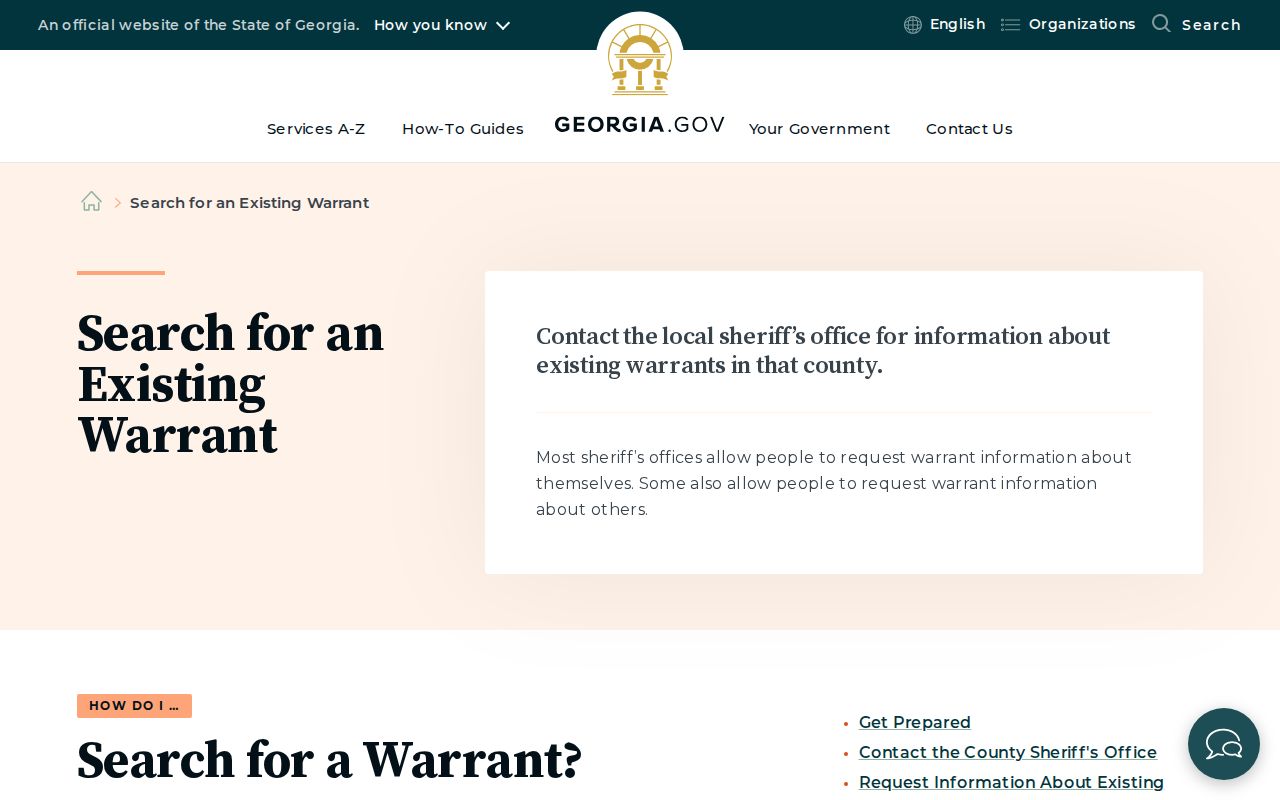
That page backs the local workflow. Identify Cook County, have a first and last name and date of birth ready, and ask the sheriff whether phone or in-person confirmation is available. It also states that the sheriff should not demand direct payment simply to provide warrant information. Treat any payment demand as a red flag. End the contact and verify the phone number through the official county or sheriff site.
Safety point: Call first and make a lawful plan because an in-person Cook County warrant check can result in custody.
Where to Check Warrants in Cook County
The official Magistrate Court service page lists criminal warrants, search warrants, and bond hearings.
That list helps route a query, but it is not a public name-search result. No single Cook County office replaces the others. The Sheriff’s Office handles countywide confirmation, service, arrest, custody, and jail routing, while Magistrate Court takes most criminal-warrant applications and related hearings. The Superior Court of Cook County, Alapaha Judicial Circuit, and its clerk hold the superior criminal files. Probate Court holds county traffic matters, and the Adel, Sparks, Lenox, and Cecil municipal clerks handle their own city dockets.
- Issuing court
- The court whose judge authorized the warrant or issued it after a missed duty.
- Serving agency
- The law-enforcement office responsible for execution or custody, often the Cook County Sheriff.
- Records custodian
- The office responsible for an existing file or for answering a focused records request.
- Current status
- The warrant’s present state as confirmed by the responsible sheriff or court, not assumed from a portal.
A citation that names a city court still needs that municipal clerk. Call that clerk even after speaking with the sheriff. A city docket and the county serving channel can hold different parts of the Cook County warrant trail.
Cook County Court Access Is Not Warrant Clearance
Georgia Courts e-access lists court-record access options and may route users to an account provider. It is not a statewide warrant database. An account search that finds nothing is not proof that a Cook County warrant has been cleared.
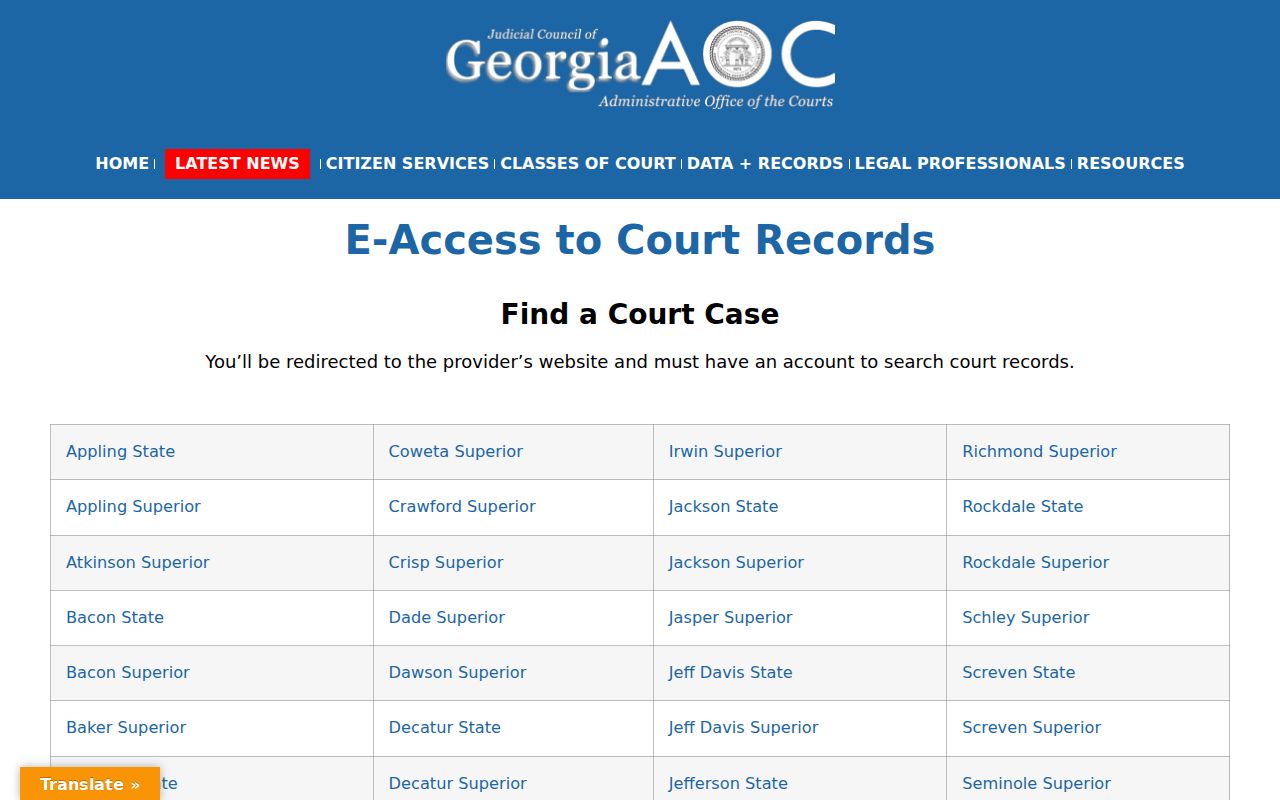
Court access is a document tool, not a warrant check. When a chosen court participates, you can pull a docket or case file through it. Fields and results differ by provider and by court, though. To learn whether a warrant is actually live, go back to the Cook County Sheriff or the issuing court. For an older file, ask April Garrett's office or the right lower-court clerk about the public record and how to get copies. Traffic payment sites deserve the same caution. EZCourtPay and PayYourTix handle citations through official channels, but neither works as a full Cook County warrant lookup. A citation that has not shown up may simply be delayed, and Cook Probate warns that posting can take up to fourteen business days.
Cook County Restricted Warrants and Access Rules
The Georgia Open Records Act request process opens the door to records that already exist. It does not make every warrant detail public. Pending-investigation material can be withheld under a cited exemption. Sealed matters, protected identifiers, and judicial work product can also stay restricted. The Cook Superior Clerk notes that juvenile, adoption, and military-discharge records are not generally open to the public.
Access rule: Ask for the public portion and request the exact legal basis when an official office withholds part of a Cook County record.
Put any written request in specific terms. Name the office, the record type, the person or case identifier, and the date range. Cook County's form lets you choose inspection or copies. The first fifteen minutes of qualifying labor are free, pages generally run ten cents each, and labor beyond that is billed at the lowest-paid qualified employee rate. That route suits documents. For live warrant status, the sheriff or the issuing court is still the place to call.
When Cook County Finds No Result
A no-result answer is not the end of the question. In Cook County, the record may be newly issued, filed under a different spelling, held by another court, sealed, or tied to a different county entirely. A citation may not be posted yet, and a court-record account may not cover the court involved. None of those gaps proves a warrant is absent.
- Confirm the spelling and date of birth used for the Cook County warrant lookup.
- Ask whether the office checked current status or only its own historical docket.
- Contact the issuing court named on the citation, notice, or earlier paperwork.
- Ask whether a focused written records request would locate a public entry or disposition.
- Document the date, office, case number, next court date, and staff instruction.
If an active matter turns up, talk to the issuing clerk or an attorney about lawful next steps. Recall, a reset, voluntary surrender, or bond are all court-controlled options. The Cook County outstanding-warrant process explains why published lists are never complete status systems.